All Categories
Featured
Table of Contents
Deloitte discovered 49% of CFOs plan to manage costs by promoting/hiring internally , indicating numerous companies will slow external hiring. LinkedIn information (2024) suggested 90% of US business now outsource a minimum of some finance processes, showing ongoing dependence on outsourcing to control costs . Offshore cost contrasts are plain: one report keeps in mind the all-in $100k+ expense of an entry-level United States accounting professional versus far lower offshore rates, indicating 70-75% labor cost arbitrage .
Updating legacy finance systems has its own expenses, however industry surveys report these projects repay rapidly. A SnapLogic study discovered companies spend $3M on typical to upgrade legacy combinations, however afterwards attain faster releases and savings in IT overhead . As Gartner's figures imply, CFOs expect such financial investments to yield increased speed and quality of insight, offsetting the in advance invest.

Attention is on quantifiable results cost decreases, forecasting accuracy enhancements, productivity ratios rather than vague cuts. As one council member in the AFP study commented, it is crucial to be transparent about cost programs ("you have to be truthful about what you are doing and communicate that we may stop hiring however not cut tasks" ) highlighting that completion goal is more powerful business efficiency.
Essential Global Capability Center Playbooks for Future Success
Steps included simplifying product lines, reducing process waste, renegotiating vendor agreements, and reallocating existing staff (instead of new hires) to focus on high-priority jobs . Most importantly, all cost savings were then reinvested in growth-oriented programs. This example shows a structured program led by finance can produce significant recurring savings without headcount cuts, and that those savings can sustain product innovation or market expansion.
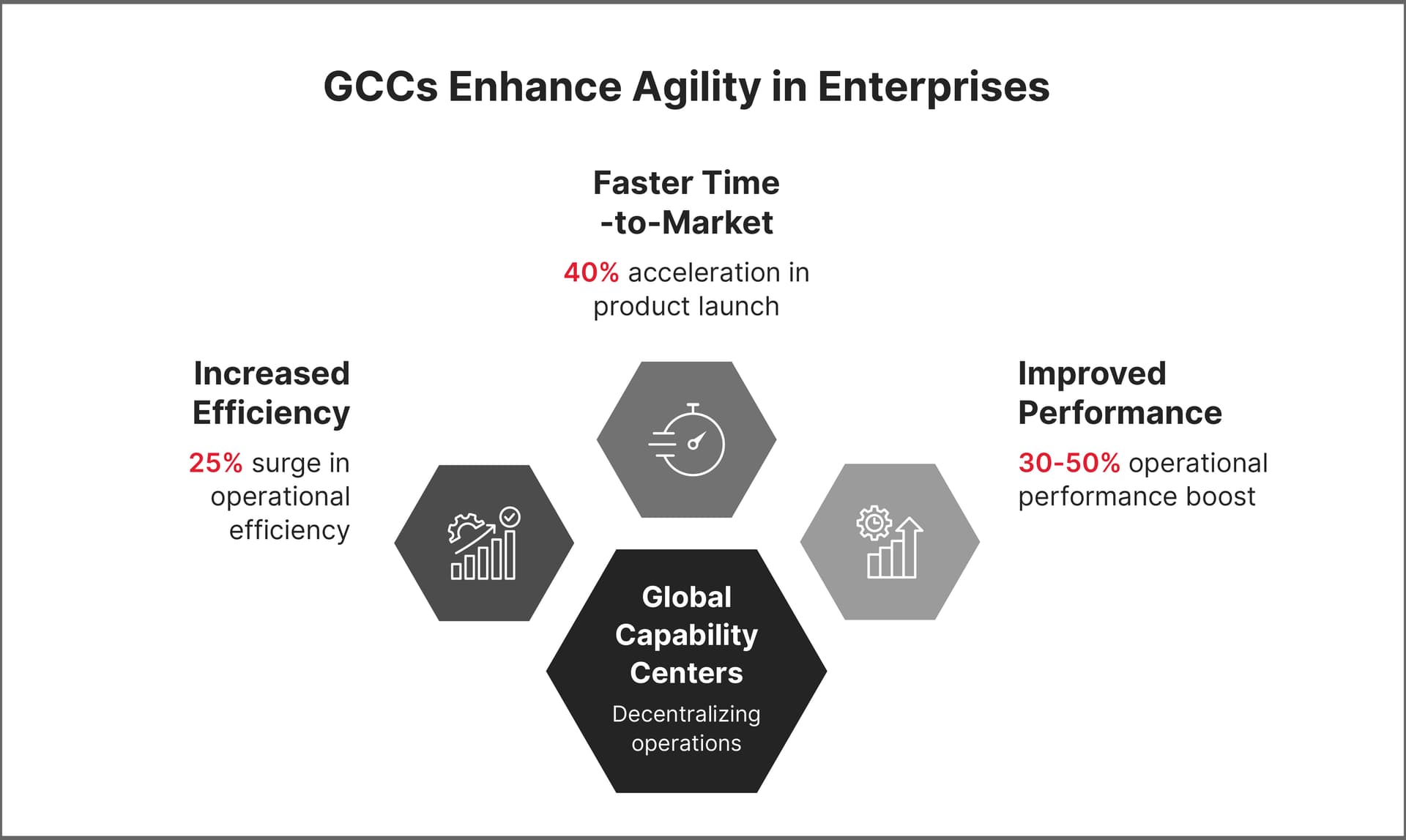
The FP&A team led a change program with three pillars: expense decrease, cost avoidance, and procedure effectiveness . For expense reduction they trimmed expenditures (e.g. headcount freeze, cutting non-critical tasks), and for cost avoidance they tightened up budgets to prevent future escalations. Seriously, they also by accelerating collections, lowering inventory days, and enhancing reporting efficiency.
Operating capital (inventory and receivables) enhancements alone maximized money and improved competitiveness (the firm might provide better pricing while preserving margins). This case exhibits how a finance-led initiative, integrating tactical and tactical levers, can accomplish considerable bottom-line effect. Even big banks highlight the exact same trade-offs. JPMorgan's tech leadership frames technology costs in regards to "unit cost" per deal .
The double-edged technique is evident: JPMorgan jobs $17B in tech costs for 2024 (among the largest in the industry) while simultaneously slashing out-of-date centers and increasing outputs. Not a common mid-market CFO example, it shows that finance leaders are aligning metrics (cost per digital customer, etc) with tactical development.
Offshore Vs Regional Hubs: a 2026 AnalysisThese financial investments make the financing function more positive and decrease labor costs in the long run. Industry analyses (e.g. Innovature BPO) reveal that nations like the Philippines and Vietnam use specialized financing services at 7075% lower labor cost. For example, one firm reported that with AI-enabled tools, a Vietnamese outsourcing accountant can accomplish 1.5 x the performance of a likewise experienced American accountant .
Impact of Labor Law Shifts On Corporate Strategy
Numerous CFOs now consider this a basic practice: one report declares to manage costs and fill ability gaps . In Asia-Pacific, CFOs are taking longer views. For example, research study highlights that lots of APAC business are collaborating with suppliers on sustainability jobs, which reduce costs through shared R&D (Bain report) .
CFOs in this context are investing in environment-related initiatives not only for compliance but likewise for expense reduction (e.g. 30% cost savings from energy-efficient cooling systems ). They also buy risk-modelling platforms after geopolitical shocks one CFO estimated stated their team now frequently stress-tests situations (e.g. trade embargoes, currency volatility) to prepare cash-flow actions .
In JPMorgan, expenses were cut by retiring old systems even as new tech was released. CFOs explicitly redirect resources, not merely trim budget plans.
In the car case, lining up sales incentives (marketing invest) with collections required cross-team planning. This highlights that expense techniques typically ripple out of finance into the wider company. The companies utilized information (analytics and reporting) to determine cost motorists: the vehicle company determined that sluggish receivables and long inventory cycles were the most significant earnings drag .
How to Reduce Enterprise Expenses Via Nearshore Models
The AFP council discussion highlights that transparency is crucial . When business communicate that cost programs aim to repurpose resources (not cut tasks), they improve buy-in and avoid undercutting morale. Senior sponsors (typically the CFO herself) need to lead the narrative that cost optimization allows development, not austerity for its own sake.

Latest Posts
Scaling Enterprise Capability Centers in America for 2026
Optimizing GCC Frameworks in 2026
A Evolving GCC America Strategy Guide